
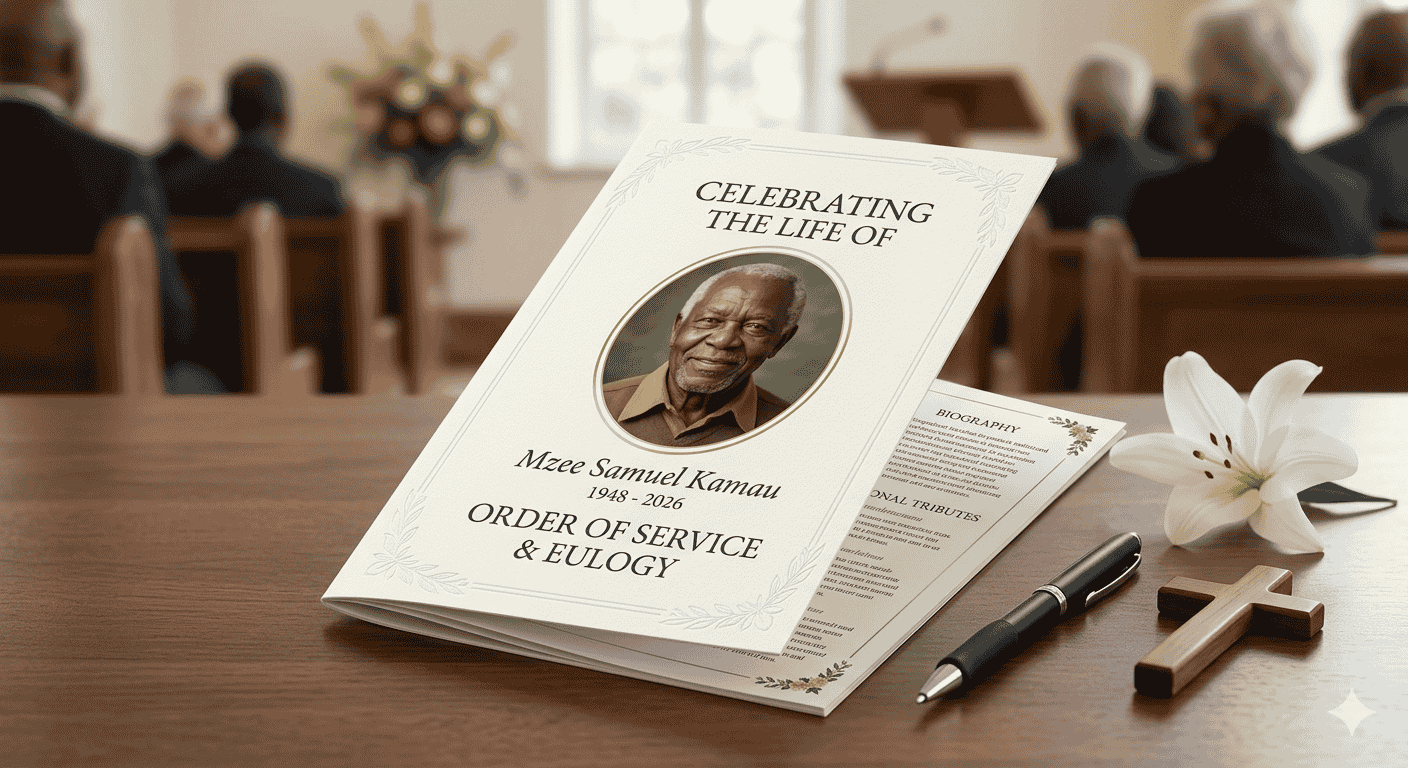
This comprehensive guide is designed to walk you through every stage of the process, from the initial brainstorming of stories to the technical design of the funeral program. Whether you are a family member, a close friend, or a professional at a cyber cafe helping a client, this guide provides the roadmap to creating a tribute that truly honors the deceased.
What is a Eulogy?
At its core, a eulogy is a speech given at a funeral or memorial service that praises and remembers the life of the person who has passed away. Unlike an obituary, which is a brief public notice of death, a eulogy is deeply personal.
The Purpose of a Eulogy
The primary goal is not to list every single date in a person’s life, but to share their essence. A well-crafted eulogy:
- Provides Comfort: It reminds the grieving audience of the joy the deceased brought into the world.
- Celebrates a Legacy: It highlights the values, lessons, and impacts the person left behind.
- Validates Grief: By acknowledging the loss, it helps the community begin the healing process.
Preparing to Write: Gathering the Essentials
Before you open a blank document, you must gather the “building blocks” of the story. A disorganized eulogy often feels hollow; a structured one feels like a journey.
What is Included?
A balanced eulogy typically covers four main pillars:
- Biographical Facts: While not a resume, you should include key details like their place of birth, education, and significant career paths. This provides context for their life’s journey.
- Personal Anecdotes: These are the “uniquely them” stories. Did they have a funny way of making tea? Were they known for a specific catchphrase? These small details make the person “live” again in the minds of the listeners.
- Key Milestones: Celebrate the big wins—marriages, the birth of children, religious milestones, or community service awards.
- Legacy and Family: Mention the people they loved most. The “survived by” section in a eulogy should feel warm and inclusive.
Finding the Tone
The most successful eulogies balance humor, solemnity, and celebration.
- Solemnity respects the gravity of the loss.
- Humor provides a necessary emotional release and honors the joy the person felt.
- Celebration focuses on the fact that their life happened, rather than just the fact that it ended.
The Writing Process: Step-by-Step
Writing a eulogy is an emotional exercise. To make it manageable, break it into three distinct sections.
The Opening: Grabbing Attention
Start by acknowledging the audience and stating your relationship to the deceased. A great opening might be a favorite quote of theirs or a striking one-sentence summary of their personality. Example: “If you knew my father, you knew that his hands were never still—they were either fixing a tractor or holding a grandchild.”
The Body: Organizing Memories
There are two common ways to organize the middle section:
- Chronologically: This follows their life from childhood to old age. It is the easiest to follow and ensures no era is left out.
- Thematically: This focuses on their traits—for example, “The Teacher,” “The Gardener,” and “The Friend.” This is often more emotional and impactful.
The Closing: A Final Farewell
Your conclusion should summarize their legacy. End with a direct address to the deceased or a message of comfort to the family. Example: “Rest well, Uncle Silas. We will keep your garden growing.”
Eulogy Design
In many Kenyan traditions, the visual presentation of the eulogy is just as important as the spoken word. This is known as Eulogy Design. It encompasses the funeral programs, tribute slides (PPTs), and printed booklets handed out at the service.
How to Design a Eulogy Program
A well-designed program becomes a keepsake for the family.
- Selecting Photos: Use high-resolution images. The cover photo should ideally be a clear portrait where the person looks happy and full of life.
- Typography and Layout: Funerals often take place in dimly lit halls or outdoors. Use large, legible fonts (at least 11pt or 12pt for the body text). Avoid overly decorative “script” fonts for long paragraphs.
- Color Schemes: While black and white are traditional, many now prefer “Celebration of Life” themes using the deceased’s favorite colors or soft pastels.
Top Applications Used for Eulogy Design
Depending on your skill level and the equipment at your disposal (like at JO-TECH Cyber), different software offers different advantages.
Entry Level (User-Friendly)
- Microsoft Word: The go-to for many. It is best for text-heavy, simple bifold programs. You can easily insert photos, but layout precision can be tricky.
- Canva: Revolutionizing the industry with modern, beautiful templates. It offers drag-and-drop ease and a massive library of floral and religious graphics.
Intermediate Level (Structural)
- Microsoft Publisher: If you need a booklet (multiple pages), Publisher is superior to Word. It allows for precise print layouts, ensuring that when you fold the paper, the pages are in the correct order.
Professional Level (Advanced Graphics)
- Adobe Photoshop: This is the “gold standard” for photo restoration. If the only photo of the deceased is an old, torn physical copy, Photoshop can fix it. It is also best for complex, multi-layered background manipulation.
- Adobe Illustrator: Best for vector borders, high-end typography, and sharp logos. It ensures that no matter how large you print (even on a banner), the quality remains crisp.
Modern Innovation
- AI Tools: In 2026, AI is a powerful assistant. You can use AI to help structure your speech or generate unique background art for the program that reflects the deceased’s hobbies, like a beautiful sunset or a specific landscape.
Practical Tips for Success
How to Design One Efficiently
- Templates vs. Custom: If you are in a rush, use a template. If you want something truly unique, start from scratch in Canva or Photoshop.
- Paper Quality: For the cover, use a slightly heavier “cardstock” (e.g., 200gsm). For the inner pages, a standard 80gsm or 100gsm bond paper works well.
Mistakes to Avoid
- Writing Too Much: Aim for a 3-5 minute delivery. On paper, this is usually 500 to 1,000 words. Anything longer and you risk losing the audience’s attention.
- Disorganization: Avoid jumping from 2020 back to 1950 and then to 1990. Stick to your chosen structure.
- Clashing Design: Don’t use too many fonts or clashing colors. It should feel peaceful, not chaotic.
- Forgetting to Proofread: This is the most critical step. Check every name, date, and location. A typo in a funeral program is very painful for the family to see later.
FAQs
How long should a eulogy be?
A spoken eulogy should be between 3 and 5 minutes. A printed booklet can be as long as 4 to 12 pages depending on the family’s wishes.
Can more than one person deliver the eulogy?
Yes. Often, a representative for the children, a friend, and a colleague will each give a short tribute. Ensure you coordinate so stories aren’t repeated.
Where can I find free eulogy templates?
Websites like Canva offer free templates. You can also browse our specialized templates for custom-made, professional templates that fit Kenyan cultural standards.
Conclusion
Writing and designing a eulogy is a labor of love. It requires patience, reflection, and a bit of technical skill. By gathering the right facts, choosing a clear structure, and using the right design tools, you create a tribute that serves as a lasting light for those left behind.
Remember, you don’t have to be a professional writer to honor someone. You just have to be sincere. Your words, no matter how simple, will provide the comfort the family needs during this time.
Need help with design or printing? The loss of a loved one is stressful enough. Let us handle the technicalities. Visit JO-TECH Cyber for professional funeral program design, photo restoration, and high-quality booklet printing. We ensure your tribute looks as beautiful as the life it celebrates.